Free shipping on orders over $49
AloeThere
Login
Back to blog

Plant care field guide

September 27, 20265 min readBy AloeThere

What Is Bright Indirect Light? A Room-by-Room Check

Turn a vague plant-label instruction into an observation of your own room. Check the light at leaf level, through the day, with a copyable location worksheet.

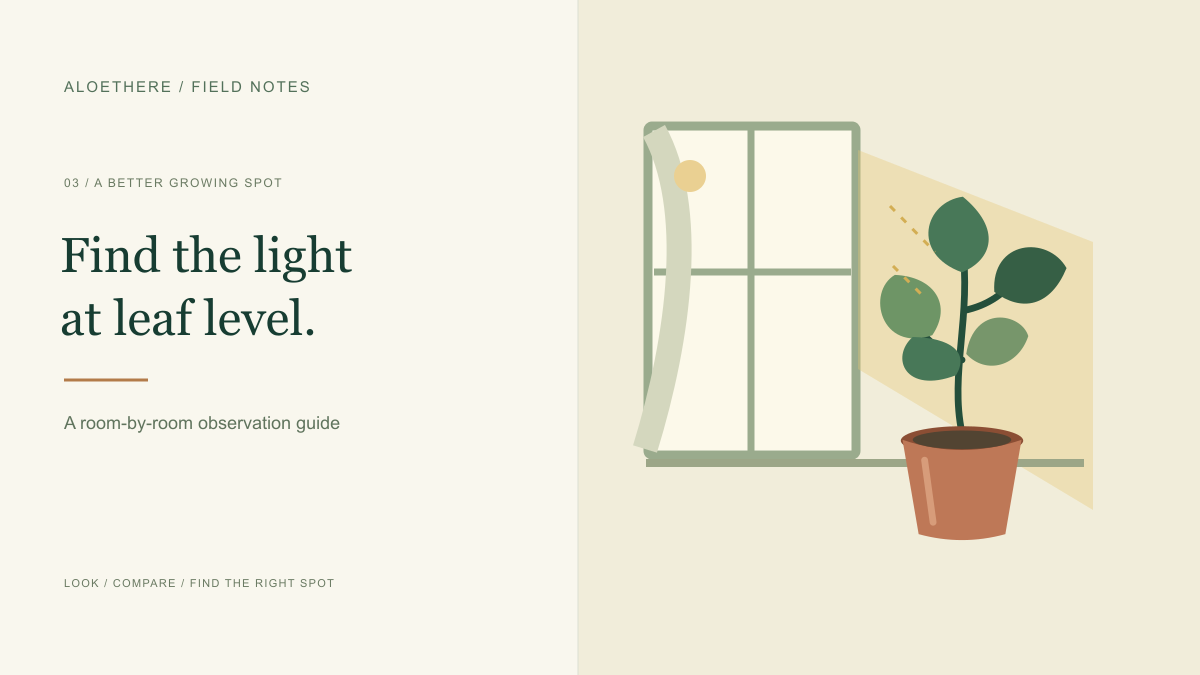
Illustration of daylight entering a window toward a potted plant, highlighting the light at leaf level.

Bright indirect light generally means a well-lit growing location without a direct beam of sunlight falling on the leaves at that time. It does not describe every bright-looking room, and it does not tell you how the location changes across the day. Iowa State University Extension explains how light reaching a houseplant depends on factors such as the window, distance, and outside obstructions. Read its houseplant-care guide.

The useful question is not simply, “Is this room bright?” Ask, “What light reaches this plant’s leaves, for how long, and does that suit this species?” You can start answering it with a few observations rather than guessing from the label alone.

Check the plant’s position, not the middle of the room

Stand or sit where the foliage will be. Look toward the window and note what is between the plant and daylight: a wall edge, deep shelf, curtain, neighboring building, tree, or other obstruction.

Do not turn window distance into a universal rule. “Three feet from a window” leaves out the window’s size and what lies beyond it. Two plants that are equally far from different windows can have different conditions.

House Plant Journal’s discussion of bright indirect light emphasizes the plant’s view of the sky and the path between the window and the foliage. Its examples are useful for thinking about obstructions rather than relying only on room brightness.

Write the exact position in your notes. “On the left end of the shelf, behind the curtain when closed” is something you can revisit. “Bright room” is not.

Notice whether sunlight reaches the leaves directly

Check the plant’s actual position at more than one time. A spot can receive indirect daylight for much of the day and direct sun for part of it. Those observations are not contradictory; the exposure changes over time. House Plant Journal makes this distinction in its discussion of direct sun within an otherwise indirectly lit location.

Do not automatically treat a patch of sun as dangerous or as beneficial. Whether that exposure is appropriate depends on the plant and the conditions it is accustomed to. The purpose of this first check is to describe the location accurately before deciding whether it suits the plant.

A useful note might be “sun reaches the lower leaves in the late afternoon.” That is more informative than relabeling the entire room “direct light.”

Make a small light map

Use the table below for one candidate location. The check times are prompts for observation, not recommended lighting schedules. Adjust them to when daylight is available and when you are home.

Location and checkDirect sun on the foliage?Curtains or obstructionsAnything that changed?
Morning
Middle of the day
Late afternoon
Another day with different weather

Add the date, the plant’s name, and the position of the pot. You do not need to produce a numerical score. The first objective is to replace an ambiguous label with a description of what happens in that spot.

Repeat the observation when an important part of the setup changes, for example, after moving the plant or changing a curtain that normally stays closed. Keep the earlier sheet so you can see what changed rather than starting from memory.

Use these room examples as questions, not prescriptions

A plant beside a window: Does the foliage have a clear view through the window, or is most of it behind the wall beside the frame? “Beside the window” can describe either setup.

A plant on a shelf across the room: Does daylight reach that shelf, or are you judging the room by the bright window at the opposite end? Check the leaf position rather than the room’s overall appearance.

A plant behind a curtain: Is the curtain usually open, closed, or changed during the day? Record the normal arrangement, not the one you set up just for a photograph.

A plant in an office: Are you describing daylight, ordinary room lighting, or a supplemental plant light? Keep these separate in the record so another person can understand the setup.

These are hypothetical layouts to inspect, not recommendations for a particular species or reports of plants we have tested.

Match the observation to the plant

Plant light requirements differ, and duration matters as well as intensity. Low-light tolerance does not mean a plant can grow with no usable light. University of Minnesota Extension recommends matching plant selection to available light and using supplemental lighting where necessary. Its indoor-lighting guide covers these decisions.

Compare a reliable care reference for the plant with your observations. When they do not match, your options include a more suitable location, an appropriate supplemental-light setup, or choosing a different plant for that position.

Do not buy a grow light solely because its electrical wattage sounds impressive. The light the plant receives is the relevant question; Minnesota’s guide distinguishes energy consumption from useful lighting information.

Use the plant’s response as evidence, not a light meter

Stretched growth or declining leaves can prompt a closer look at light, but appearance alone is not a complete diagnosis. Minnesota Extension describes several responses to unsuitable light; other growing conditions still need consideration.

Keep a baseline photo and record location changes alongside watering observations. When investigating a problem, that combined history is more useful than repeatedly changing one thing and forgetting the previous setup. The plant-problem photo checklist helps make comparisons clearer.

If you move a plant, revisit its watering checks rather than assuming the old interval still applies. Use the indoor watering guide and your weekly care routine to keep those observations together.

“Bright indirect light” becomes useful when it describes a real place. Start with what reaches the leaves, record how that changes, and use the plant’s requirements to make the decision.