Free shipping on orders over $49
AloeThere
Login
Back to blog

Plant care field guide

May 10, 20268 min readBy AloeThere

Succulent Care for Beginners: Water, Light, Soil, and the Mistakes to Avoid

A beginner-friendly indoor succulent care guide covering watering, light, soil, drainage, common mistakes, and simple next steps for choosing a healthy plant.

A group of compact, healthy succulents in terracotta and sage pots beside a bright window

Succulents are popular for a reason: they are sculptural, compact, and much more forgiving than many houseplants. But they are not magic. Most beginner problems come from the same small group of issues: too much water, too little light, dense soil, or a pot that cannot drain.

If you are learning how to care for succulents indoors, start with the environment before you start with a watering schedule. Indoor succulents usually do best with bright light, a container that drains, and soil that dries faster than standard potting mix. Once those pieces are right, watering gets much easier.

This guide is built for the plant parent who wants simple rules that actually work indoors.

Quick beginner checklist

Use this as your simple succulent care for beginners checklist:

  • Put the plant near bright light, such as a sunny window or a strong grow light.
  • Use a pot with a drainage hole.
  • Choose cactus/succulent soil or a gritty mix that drains quickly.
  • Water deeply, then wait until the soil is dry before watering again.
  • Empty saucers and cachepots after watering.
  • Watch for stretching, mushy leaves, yellowing, or soil that stays wet for days.
  • Water less often during slower, lower-light fall and winter months.

The short version

If you remember nothing else, remember this: succulents need bright light, fast drainage, and a wet-dry watering rhythm.

The University of Minnesota Extension explains that cacti and succulents need abundant light, modest water, modest fertilizer, and well-drained sandy soil. Iowa State University Extension similarly recommends bright indoor light, containers with drainage, and soil that dries quickly.

That means most indoor succulent care comes down to four questions:

  1. Is the plant getting enough light?
  2. Can extra water escape the pot?
  3. Does the soil dry out between waterings?
  4. Are you adjusting care as seasons and light levels change?

Succulent light requirements indoors

Most indoor succulents want bright light. A sunny windowsill is usually the easiest starting point. South Dakota State University Extension says most succulents need at least six to eight hours of light, and West Virginia University Extension recommends a bright, sunny windowsill with at least six hours of direct daylight for indoor plants.

Good signs your succulent has enough light:

  • New growth stays compact.
  • Rosettes keep a tight shape.
  • Color stays strong instead of fading to pale green.
  • Stems are not leaning hard toward the window.

Signs your succulent needs more light:

  • It stretches upward or sideways.
  • Leaves spread farther apart.
  • Rosettes flatten or open dramatically.
  • New growth looks weaker than older growth.

If your plant has been in lower light, move it brighter gradually. Sudden intense sun can stress or scorch leaves, especially if the plant has been indoors for a while.

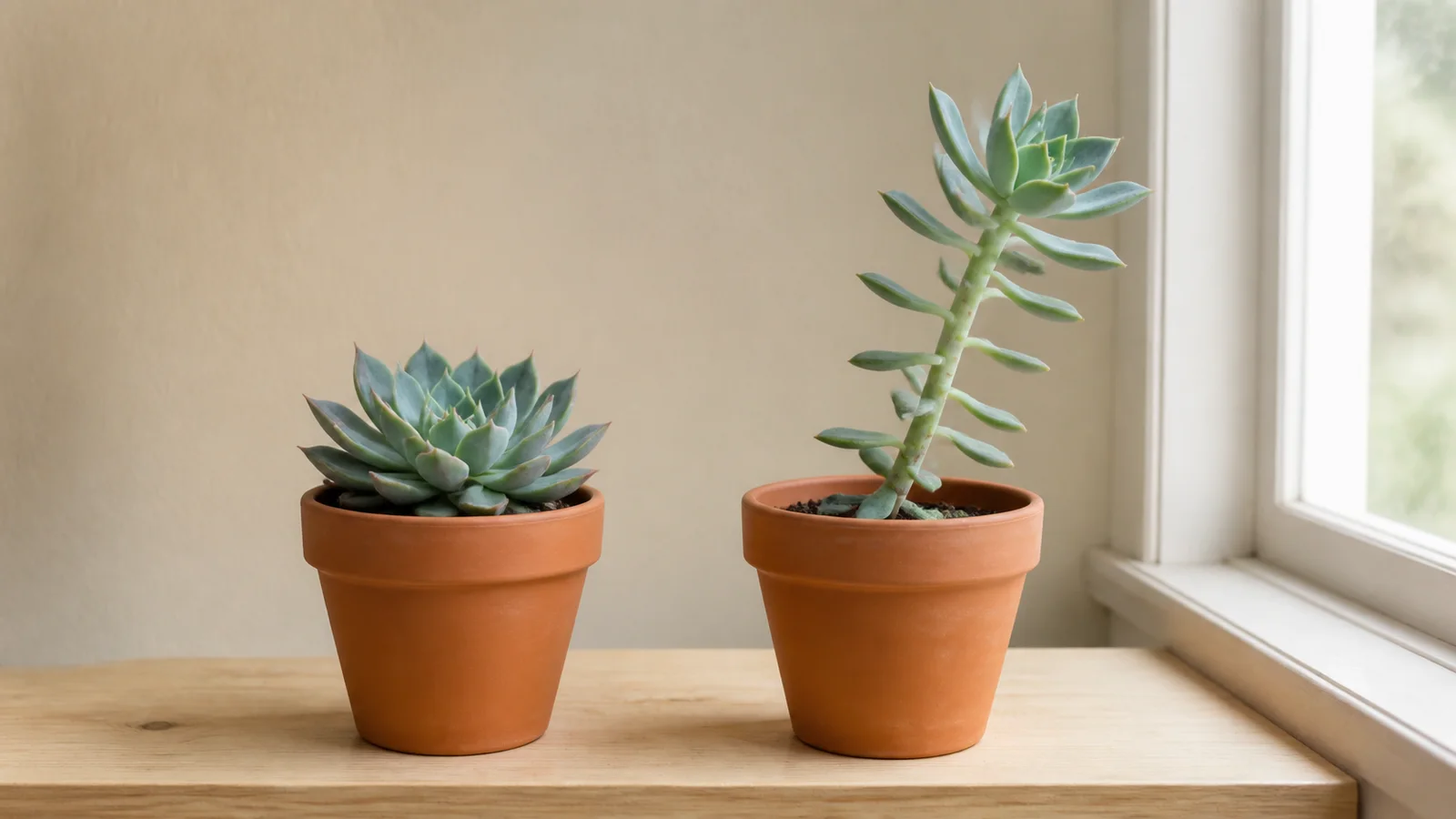
A compact succulent beside a leggy, stretched succulent near a bright window
Compact growth on the left and stretched growth on the right show how light changes a succulent’s form.

How often should you water succulents?

The best watering schedule is not a calendar. It is the soil.

Water when the soil is dry, then water thoroughly until excess water drains from the bottom of the pot. After that, leave it alone until the mix dries again. The University of Minnesota Extension recommends watering thoroughly, discarding excess water, avoiding repeated shallow sprinklings, and allowing the soil to dry completely between waterings.

A beginner-friendly watering routine:

  1. Check the soil with your finger, a wooden skewer, or the weight of the pot.
  2. If the soil is still damp, wait.
  3. If the soil is dry, water thoroughly.
  4. Let extra water drain out.
  5. Empty the saucer or decorative outer pot.
  6. Recheck in several days instead of topping off every day.

In brighter spring and summer conditions, plants may dry faster. In lower-light fall and winter conditions, they usually need less water. South Dakota State University Extension notes that succulent water needs decline during fall and winter as light levels decrease and growth slows.

Best soil for succulents

Succulents need oxygen around their roots. Dense, water-holding potting soil can stay wet too long indoors, especially in cool rooms or low light.

Look for:

  • Cactus or succulent mix
  • Added perlite, pumice, coarse sand, or fine gravel
  • A texture that drains quickly and does not stay soggy

The University of Minnesota Extension recommends well-drained sandy soil for cacti and succulents. Iowa State University Extension says commercial cactus and succulent mixes are good choices for new indoor succulent gardeners and also gives a DIY approach using one part organic material with two parts mineral material.

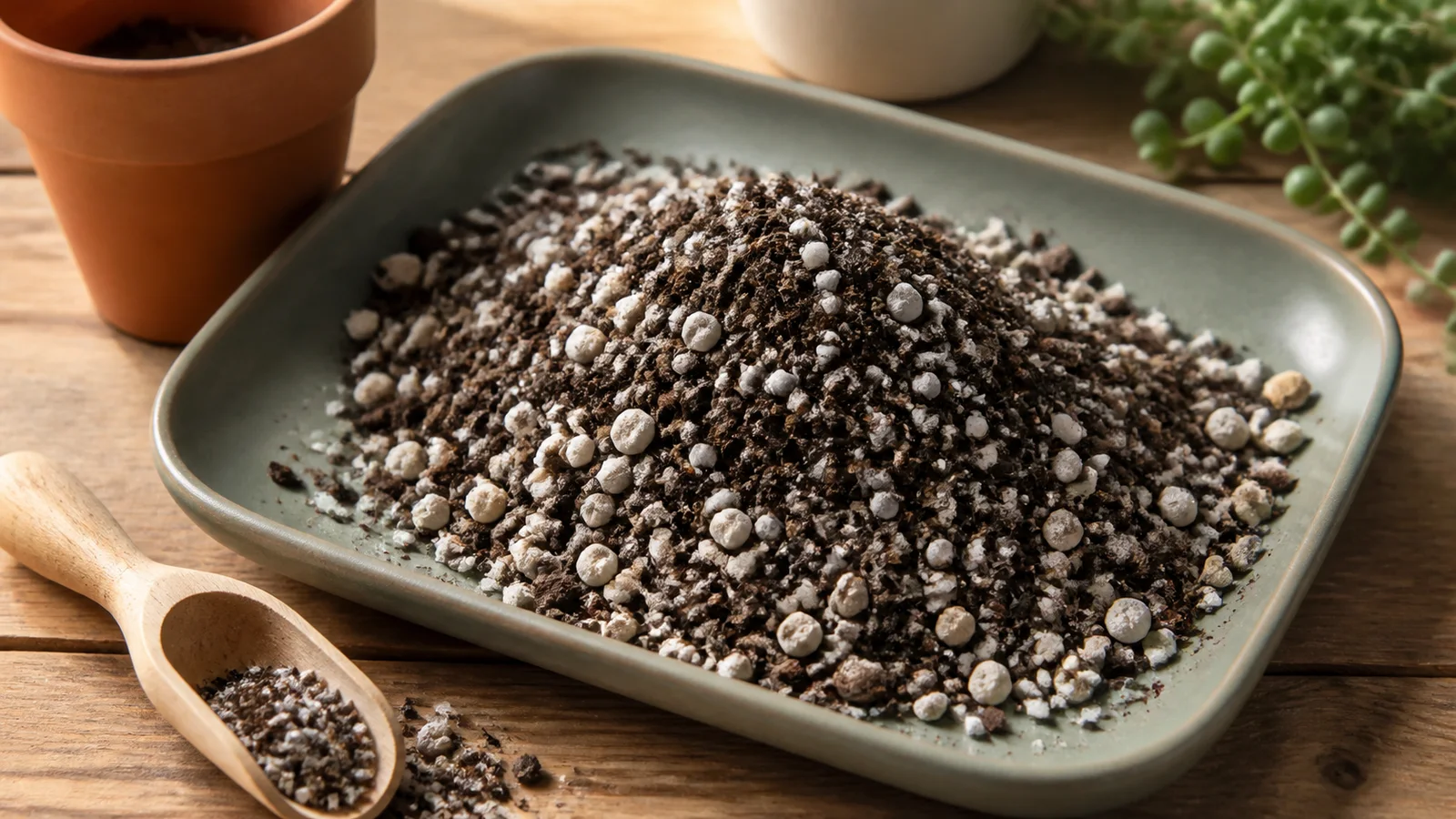
A simple starting mix is one part potting soil plus one part coarse mineral amendment such as perlite or pumice. If your home is humid or your pots dry slowly, lean even grittier.

A gritty succulent soil mix with potting soil, perlite, pumice, and mineral grit
A loose mix with coarse mineral material helps water drain and leaves air around succulent roots.

Do succulents need drainage holes?

Yes, especially for beginners.

A drainage hole gives extra water a way out. Without one, water can collect at the bottom of the container even when the top looks dry. Iowa State University Extension says succulent containers must have drainage holes and that gravel drainage layers are not a suitable replacement.

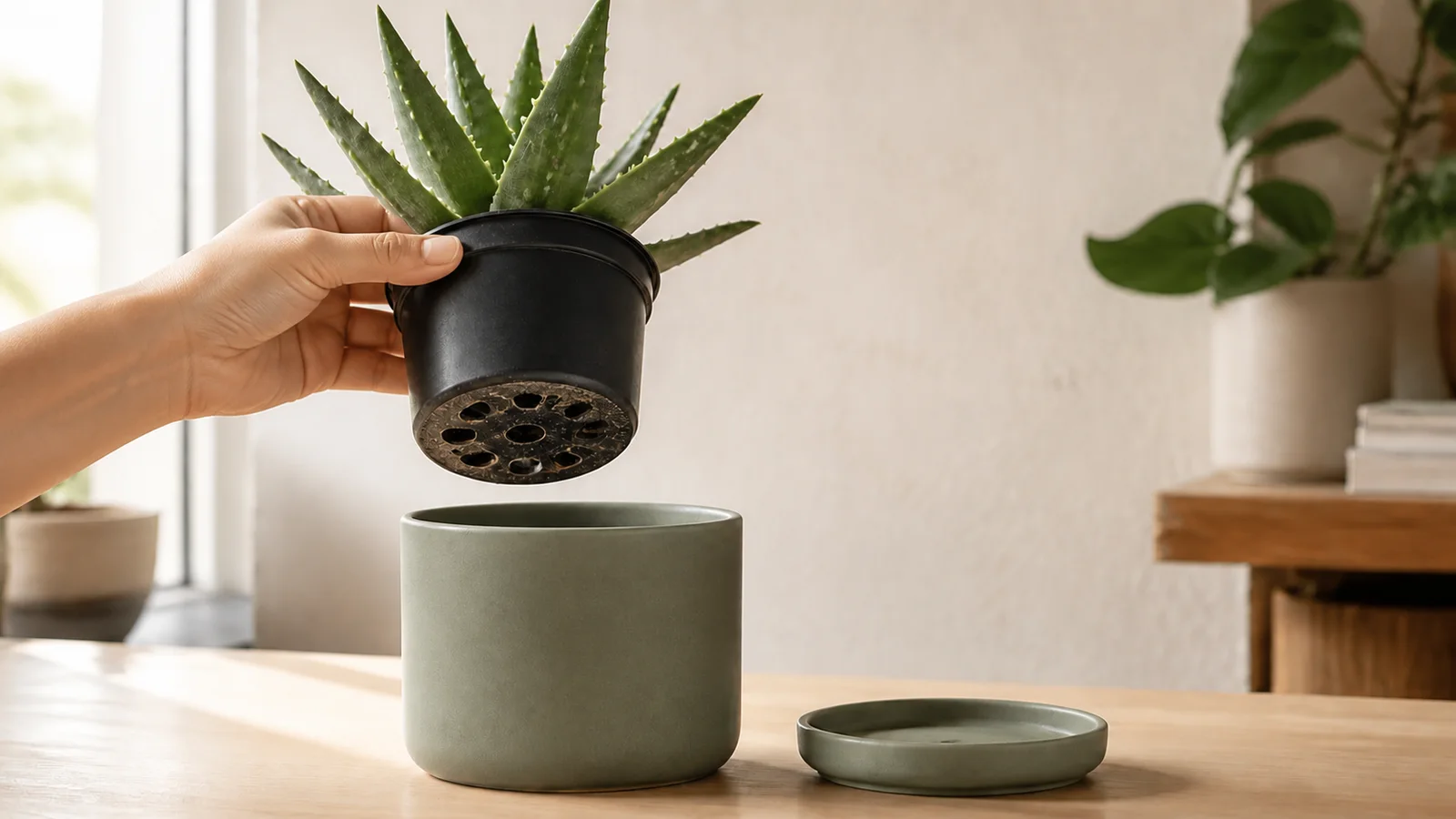
If you love a decorative pot with no drainage, use it as a cachepot: keep the succulent in a nursery pot with holes, then place that inside the decorative container. Remove it to water, let it drain, and put it back once it stops dripping.

A hand lifting a draining nursery pot above a sage green decorative cachepot
Keep a succulent in a draining nursery pot, then place it inside a decorative cachepot after excess water escapes.

Common succulent mistakes

Mistake 1: Watering too often

Soft, mushy, yellowing, or translucent leaves often point to too much water or soil that stays wet too long. Stop watering, check whether the pot drains, and repot into a faster-draining mix if needed.

Mistake 2: Giving too little light

A tall, stretched, leaning plant is usually asking for more light. South Dakota State University Extension describes long, lanky growth as a sign that the plant needs a brighter location.

Mistake 3: Using regular potting soil by itself

Standard potting soil can hold more moisture than many indoor succulents want. Mix in mineral amendments or use a cactus/succulent blend.

Mistake 4: Treating all succulents exactly the same

Succulents share many needs, but different species can dry at different speeds. Pot size, leaf thickness, room temperature, light, and humidity all matter.

Best beginner succulents to start with

Great beginner picks are forgiving, easy to read, and not too fussy indoors.

Echeveria

Echeverias are popular because of their rosette shape and collector appeal. They like strong light and a drying period between waterings. If an echeveria starts stretching, it is asking for more light.

AloeThere often carries collector-friendly Echeveria varieties, including Echeveria Lola, Echeveria Firefly, and Echeveria Ben Badis, depending on current inventory.

Haworthia

Haworthias are compact and often more tolerant of bright indirect light than some sun-hungry rosette succulents. They are good for smaller shelves and windowsills.

Jade plant

Jade plants have thick leaves and a tree-like form over time. Iowa State University Extension lists jade plants among common succulent species and emphasizes the same bright-light, quick-draining care principles for indoor succulents.

Aloe

Aloes are classic indoor succulents with strong shapes and a tough personality. Give them bright light, drainage, and room to dry between watering.

Sedum

Many sedums are low-maintenance and drought-tolerant. Some are better outdoors, but compact varieties can be excellent in bright containers.

Looking for a beginner-friendly succulent? Browse AloeThere's current succulent collection and start with a plant that fits your light, space, and care style.

Should you fertilize succulents?

Succulents are not heavy feeders. A light dose during active growth is usually enough. The University of Minnesota Extension recommends fertilizing cacti once or twice a year during late spring or summer and fertilizing other succulents a few times during the brighter months with diluted fertilizer.

Skip fertilizer when the plant is stressed, freshly repotted, sitting in low light, or dormant in winter. More fertilizer will not fix too little light or too much water.

Final care checklist

Before you water, ask:

  • Is the soil actually dry?
  • Does the pot have a drainage hole?
  • Is the plant getting bright enough light?
  • Are the leaves firm rather than mushy?
  • Is new growth compact instead of stretched?
  • Has the season changed enough that watering should slow down?

If the answer to those questions is yes, you are already doing the important things right.

Final thoughts

Succulent care gets easier when you stop treating these plants like typical tropical houseplants. They do not want constant moisture. They want bright light, fast drainage, and a rhythm of deep watering followed by a real dry-down.

Start there, watch how your plant responds, and adjust one thing at a time. That is how you build a shelf of succulents that stays compact, colorful, and healthy.

When you are ready to add one, choose a plant that matches the light you actually have. AloeThere's store is a good next stop for current live plants, and the FAQ has quick answers for shipping, care, and common plant questions.

Sources and further reading